
Knauf Attic Insulation in Mesquite: A Homeowner’s Guide
Knauf attic insulation is a strong fit for most Mesquite homes, but not for every attic. The products are formaldehyde-free, the blown-in fiberglass holds its settled R-value well in dry desert air, and the ECOSE binder cuts the dust-and-itch factor that makes older fiberglass miserable to live with. The catch is ventilation. In an attic with poor airflow, humidity builds, and blown fiberglass loses performance in a way spray foam does not. Get the venting right and Knauf is one of the smartest 10-year buys in Mesquite. Get it wrong and you’ve paid for insulation that can’t do its job.
If you’d rather not climb into a 140-degree attic to find out which camp you’re in, call (833) 954-5588 for a free estimate.
What Is Knauf Attic Insulation, and Why Does It Matter in Mesquite?
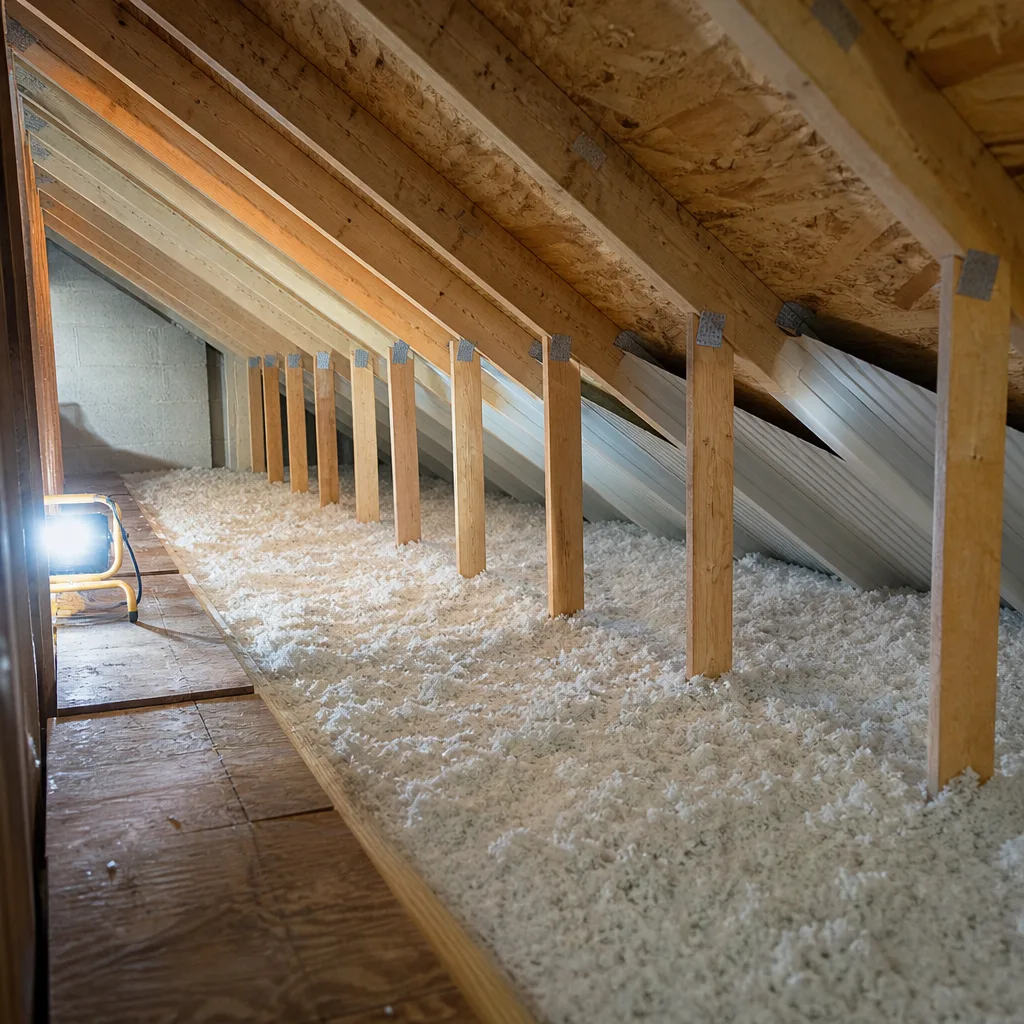
Knauf is a German building-materials manufacturer with a large US fiberglass operation, and their insulation lineup covers batts, blown-in fiberglass, and an air-sealing system called EcoSeal. For Mesquite homeowners, the two products worth understanding are JetStream blown-in fiberglass and EcoSeal.
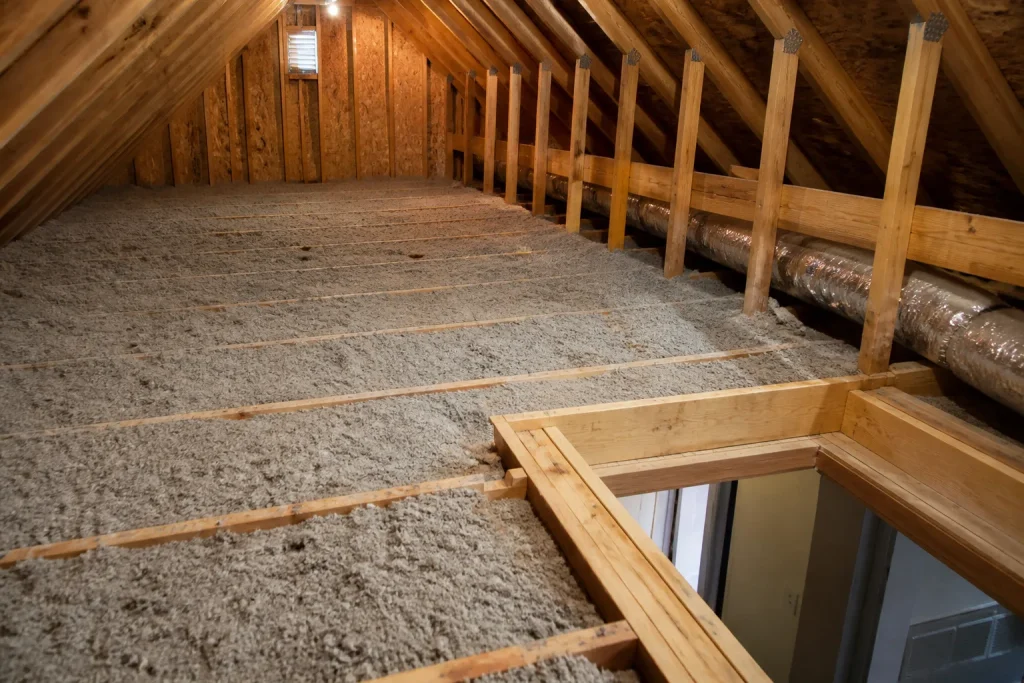
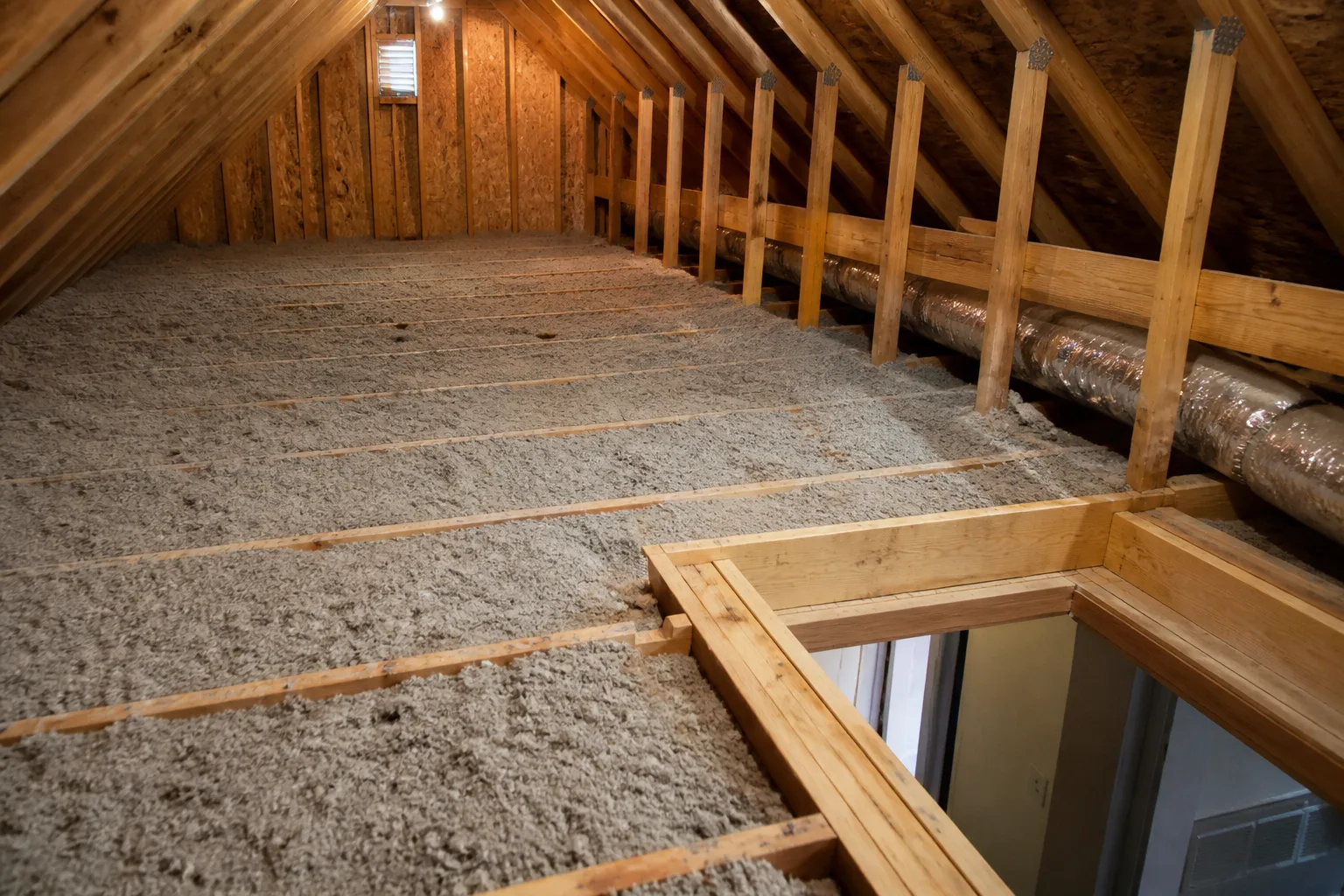
Here’s why the local climate matters. Mesquite sits in the Mojave Desert at low elevation, with summers that push past 110°F and winters that dip near freezing on clear nights. That swing means your attic works two jobs: it’s a heat trap in July and a heat leak in January. Fiberglass handles both well when it’s installed at the right density and the attic is properly vented. Knauf’s blown-in product is designed to be installed with their JetStream machine, which shreds and fluffs the fiberglass to a consistent density rather than the uneven clumps you get from a rented blower and a weekend of guesswork.
What sets Knauf apart from Owens Corning and Johns Manville isn’t raw R-value per inch – all three are close. It’s the binder. Knauf’s ECOSE technology replaces the traditional phenol-formaldehyde binder with a bio-based one derived from plant starches. That means no formaldehyde off-gassing, less dust during install, and a product that doesn’t carry that sharp chemical smell for weeks after the crew leaves.
Knauf JetStream Blown-In vs. Standard Fiberglass Batts
Blown-in fiberglass and batt insulation are not interchangeable, and the difference shows up most in attics with irregular framing. Standard batts are manufactured in fixed widths – typically 16 and 24 inches to match common joist spacing – and they have to be cut and fit around every obstruction. In a simple attic with clean truss spacing, that’s fine. In a Mesquite attic with HVAC ductwork, plumbing chases, recessed lights, and diagonal bracing, batts leave gaps. Gaps are where heat moves.
Knauf’s JetStream system blows fiberglass in at a controlled density, filling around obstructions and settling into the corners batts can’t reach. The coverage is more uniform, which matters because thermal performance is only as good as the thinnest spot in the blanket.
- Batts: Best for new construction with open, regular framing and no obstructions. Fast and predictable.
- JetStream blown-in: Best for retrofit work in existing Mesquite homes, especially attics with ducts, wiring, or irregular truss layouts.
- Density: Blown-in can be installed at higher density for better settled performance, which batts cannot match without compressing (and compression reduces R-value).
- Settling: Knauf’s blown-in product is engineered to resist settling over time, which is the real risk with cheap loose-fill fiberglass.
If your attic has a flat ceiling with open trusses and no mechanical equipment, batts are a reasonable, budget-friendly choice. If it’s anything more complex, blown-in is worth the small premium.
Knauf EcoSeal vs. Spray Foam: Which Air Sealing Method Wins?
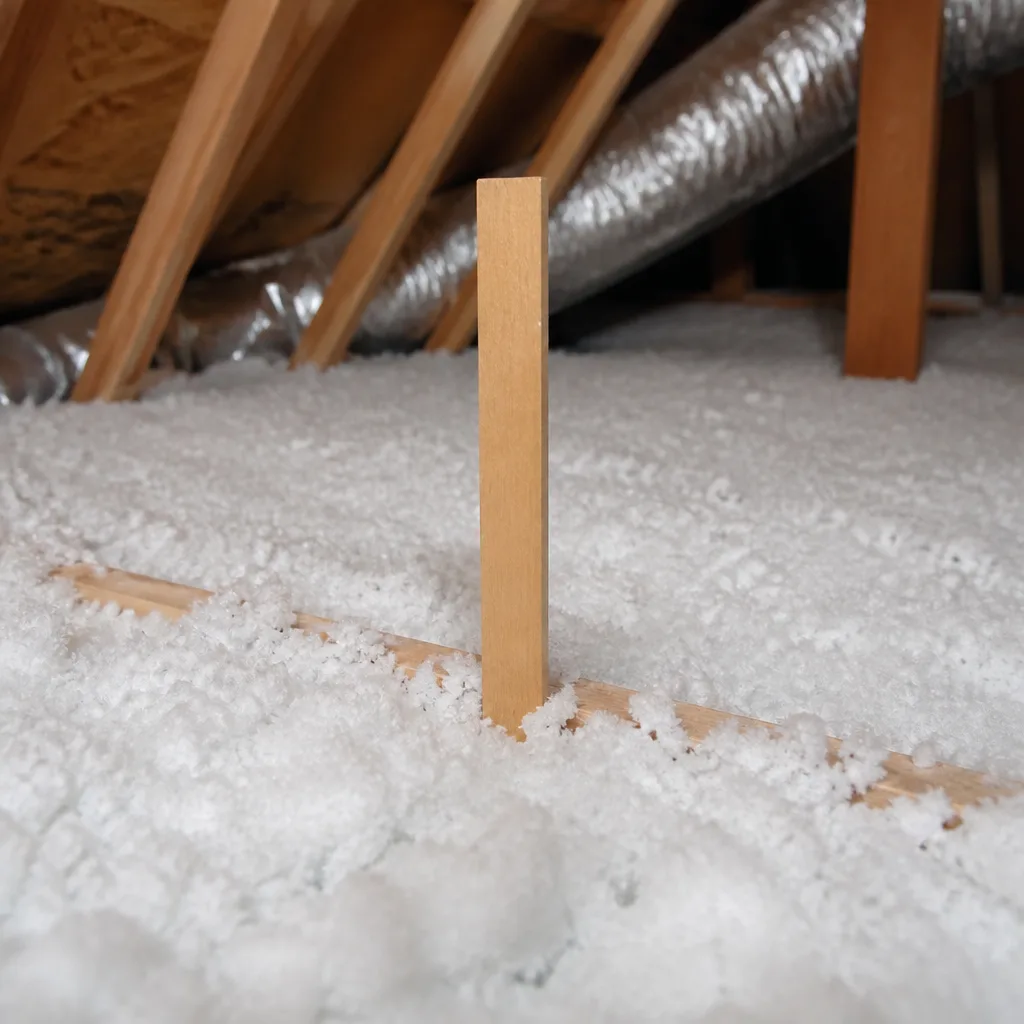
EcoSeal is Knauf’s spray-applied air barrier – a fiberglass-and-adhesive blend that seals gaps in the building envelope without the foam expansion you get from spray foam. It’s a different tool for a different job.
Spray foam – whether open-cell like Icynene or Demelec, or closed-cell – seals and insulates in one step and handles complex penetrations beautifully. It also blocks air movement completely when applied correctly. But it’s more expensive, it requires cure time, and closed-cell foam in particular is a bigger commitment if you ever need to access the space above it.
EcoSeal sits in the middle. It’s applied to the attic floor and building envelope to close air leaks before insulation goes in, and it costs less than a full spray foam application. In a Mesquite attic where the primary problem is air leakage (warm air escaping through ceiling penetrations in summer, cool air leaking in during winter), EcoSeal plus blown-in fiberglass is often the best value combination.
Where spray foam still wins: attics with severe air leakage, cathedral or vaulted ceilings with limited space for insulation thickness, and any situation where you need the insulation and air barrier as one product. If you’re comparing options, our spray foam insulation page breaks down the open- and closed-cell tradeoffs in more detail.
What Does ECOSE Technology Actually Mean for Mesquite Homes?
ECOSE is Knauf’s bio-based binder. Traditional fiberglass insulation uses a phenol-formaldehyde binder to hold the glass fibers together – that’s the source of the chemical smell and the dust that makes installation unpleasant. ECOSE replaces it with a binder made from renewable plant materials.
What that means practically:
- No added formaldehyde. The product doesn’t contribute formaldehyde to indoor air, which matters more in a tightly built home with limited air exchange.
- Lower dust and itch. Installers notice the difference; homeowners living in the house during a retrofit notice it too.
- No lingering odor. The sharp smell from traditional fiberglass fades in days. ECOSE products smell like almost nothing.
- Same thermal performance. The binder change doesn’t affect R-value per inch.
For a Mesquite home, the air-quality benefit is modest because our climate keeps windows open more months of the year than a cold-climate house. But if anyone in the household has chemical sensitivities or respiratory concerns, or if you’re insulating a bedroom ceiling, ECOSE is a reasonable reason to choose Knauf over competing fiberglass brands.
What Voids the Knauf Settled R-Value Warranty?
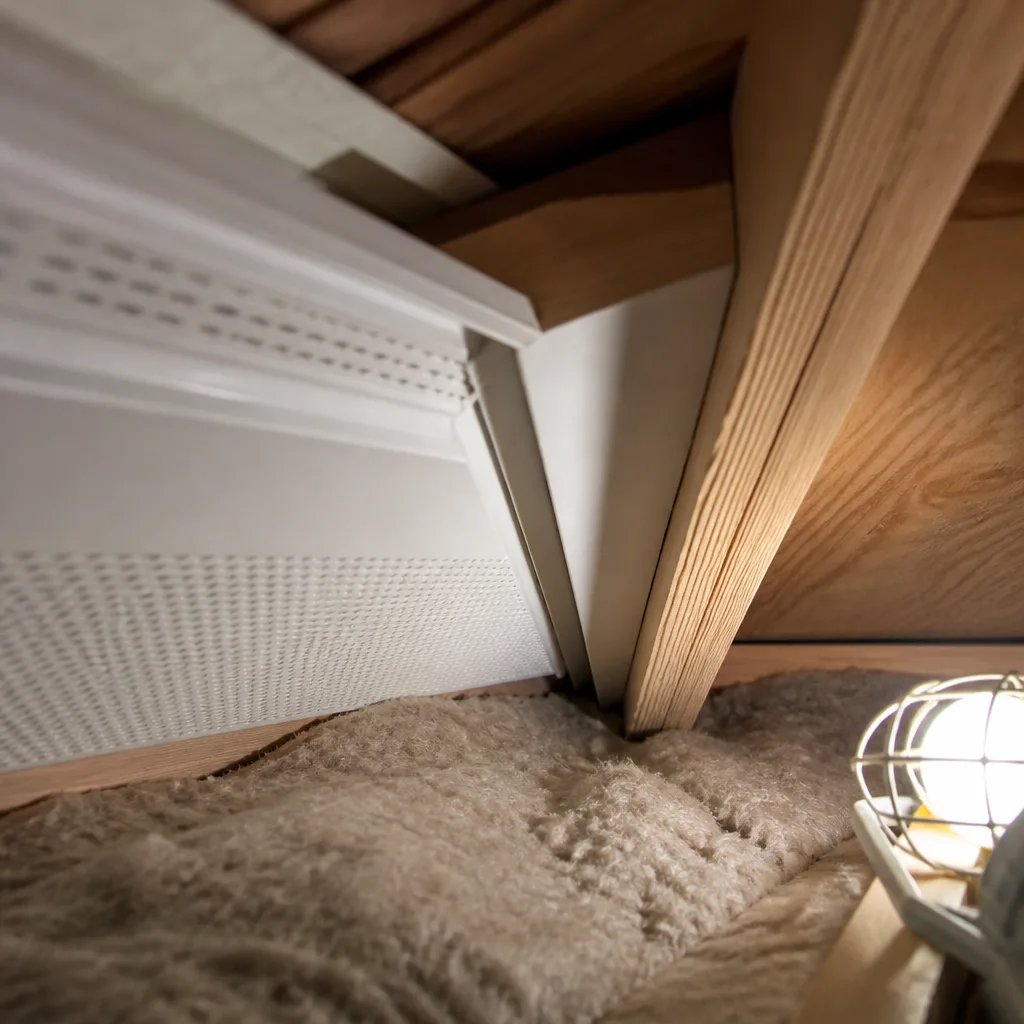
Knauf’s blown-in fiberglass carries a settled R-value guarantee – the manufacturer commits to the installed R-value holding after the product settles. It’s one of the more generous guarantees in the category, and it’s the reason Knauf stands up well on a 10-year cost basis against cheaper loose-fill products.
What voids it in real-world installation:
- Incorrect installed density. Blown-in fiberglass has to be installed at a specified bag count per square foot to hit the target R-value. Under-blow the attic and the warranty doesn’t cover you – the installer’s math did the damage.
- Compression. Anything that compresses the insulation – stored boxes, ductwork laid on top, walking across it during service calls – reduces R-value and can void coverage.
- Moisture damage. In a poorly vented attic, condensation or roof leaks saturate the fiberglass, and saturated fiberglass loses performance permanently. This is where Mesquite attics can actually get into trouble despite the dry climate – a bathroom vent dumping moist air into the attic, or a blocked soffit vent, can create localized moisture problems even in the desert.
- Improper installation around obstructions. Insulation has to be in contact with the ceiling surface, not bridged over ductwork or gaps.
The warranty is only as good as the installation. That’s the reason we check attic ventilation and calculate bag counts before quoting a job rather than after.
Which Knauf Product Fits Your Mesquite Attic Type?
Mesquite has a mix of housing stock – older single-story homes with standard truss attics, newer construction with vaulted ceilings, and manufactured homes with flat or low-slope roofs. Each attic type calls for a different approach.
Standard truss attics with open framing and accessible attic space are the easiest. JetStream blown-in fiberglass to the target depth, EcoSeal on the building envelope before install, and you’re done. This is where Knauf performs best on a cost-per-R-value basis.
Vaulted ceilings have limited cavity depth, and that’s where fiberglass struggles to hit target R-value without a lot of thickness. Spray foam – closed-cell in particular – outperforms here because it delivers high R-value per inch. Knauf batts are still an option if the cavity allows, but a hybrid approach (foam on the vaulted sections, blown-in on the flat ceiling) often makes the most sense.
Flat and low-slope roofs are common on additions and manufactured homes. These often have minimal attic access, and blown-in installation requires a commitment to creating an access point if one doesn’t exist. Knauf’s blown-in still works well once access is established.
For a full breakdown of how these approaches fit Mesquite’s housing stock, our main attic insulation page covers the diagnosis process.
When to Call a Pro
Diagnosing an attic is not a homeowner job. The insulation you can see isn’t the whole story – air leakage, ventilation balance, and settled depth all need to be measured. And honestly, crawling through a 130-degree Mesquite attic in July to check venting is a job best left to people who do it regularly.
Where a professional assessment saves money:
- You can’t tell if your current insulation has settled below its rated R-value without measuring depth and density.
- Air leaks at ceiling penetrations are invisible from below.
- Ventilation problems usually show up as moisture stains in the attic, not the living space.
A properly scoped estimate checks all of it before recommending a product. Manufacturers like Mesquite homeowners choose between Knauf, Owens Corning, or Rockwool on the strength of the diagnosis, not the brand name.
Related services in Mesquite: we also install attic insulation using all three methods – batts, blown-in, and spray foam – across eight brands.
The Bottom Line
Knauf is a solid choice for most Mesquite attics – particularly truss attics with adequate ventilation, where JetStream blown-in fiberglass delivers uniform coverage and settled-R-value reliability that cheaper loose-fill products don’t match. ECOSE’s formaldehyde-free binder is a genuine improvement for indoor air quality and installer comfort.
Where Knauf isn’t the answer: vaulted ceilings that need high R-value in a shallow cavity (spray foam wins), and poorly vented attics where moisture risk changes the math. In those cases, we’ll tell you so at the estimate rather than install a product that won’t perform.
If you’re in Mesquite and want to know which Knauf product fits your attic (or whether a competing brand makes more sense), Attic Insulation Mesquite offers free estimates. Call (833) 954-5588. Our technicians have up to 11 years of experience with attic work, and we recommend from eight brands – Knauf, Owens Corning, Johns Manville, Rockwool, CertainTeed, Icynene, Demelec, and GreenFiber – rather than pushing one product line.
We answer 24/7. Fast dispatch from 7am to 7pm, Sunday through Friday.
Frequently Asked Questions
Neither is categorically better. Knauf’s ECOSE binder is formaldehyde-free and produces less dust and odor than traditional fiberglass, which is Knauf’s main edge. Owens Corning has a comparable R-value and a wider product lineup. The right choice depends on attic conditions, target R-value, and budget – not on brand alone. Call (833) 954-5588 to compare both at your free estimate.
Knauf’s blown-in product is engineered to resist settling, and the manufacturer backs it with a settled R-value guarantee. Real-world loss comes from installation errors (under-dense blowing), compression from stored items or ductwork, and moisture damage in poorly vented attics. Proper install and ventilation are what protect the rated R-value. Call (833) 954-5588 to have your attic’s existing insulation measured.
EcoSeal is a spray-applied fiberglass air barrier that seals gaps in the building envelope without the foam expansion of spray foam. It costs less than full spray foam and is applied before insulation goes in. Spray foam still wins for severe air leakage, vaulted ceilings, and anywhere you need insulation and air barrier in one product. Call (833) 954-5588 to find out which fits your Mesquite attic.
Pricing depends on attic square footage, target R-value, current insulation depth, obstructions, and whether air sealing (EcoSeal) is included. Most Mesquite blown-in fiberglass installations fall in a modest range compared to spray foam, and every job is priced by a free written estimate – not a phone quote. Call (833) 954-5588 to schedule yours.
Written by the team at Attic Insulation Mesquite.
Need Insulation Help?
Call Attic Insulation Mesquite - licensed & insured, here with fast help in Mesquite.
(833) 954-5588